

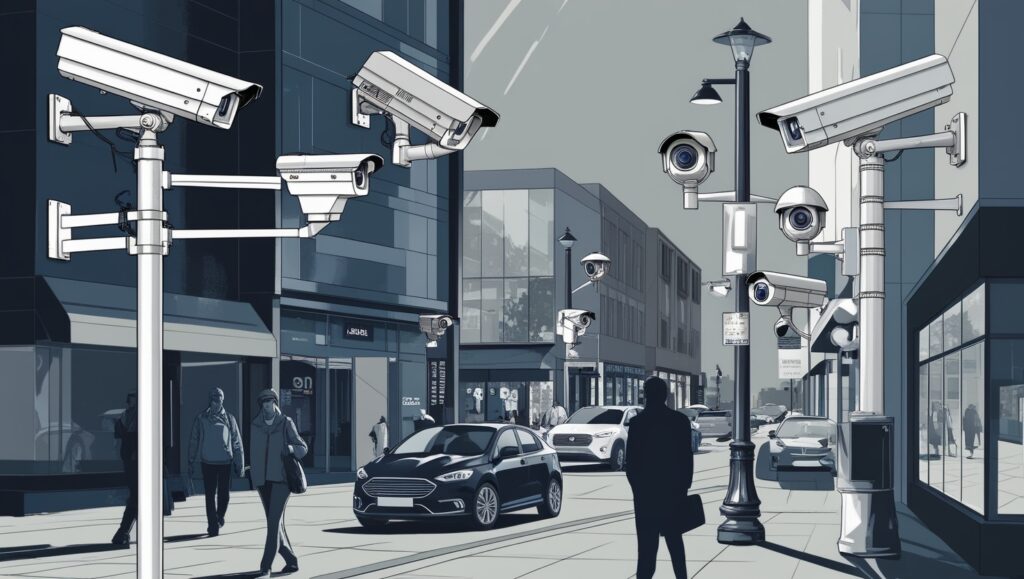
Imagine a world where every thought, every action, and even your emotions are monitored by an omnipresent government. Welcome to George Orwell’s 1984 – a dystopian nightmare where Big Brother is always watching, and freedom is nothing but an illusion. In today’s video, we’re diving deep into one of the most powerful and unsettling novels of the 20th century. Stick around as we uncover the chilling truths of Orwell’s world and the lessons it still holds for us today.
1984, published in 1949, is George Orwell’s vision of a totalitarian future, where the world is divided into three superstates constantly at war: Oceania, Eurasia, and Eastasia. The novel takes place in Oceania, where the Party, led by the enigmatic figure of Big Brother, controls everything and everyone. This isn’t just a government that watches people—it seeks to control their very thoughts.
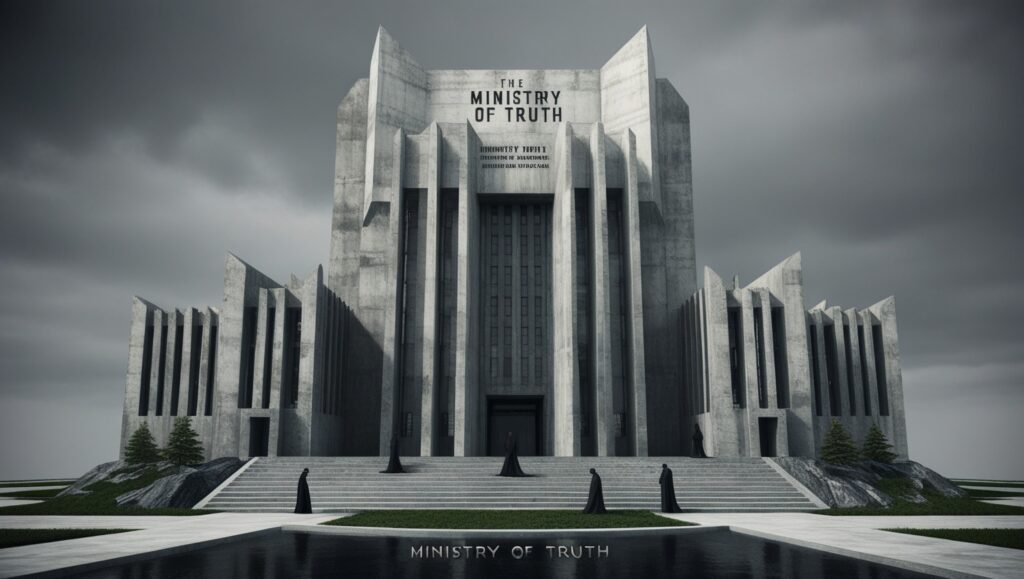
Our protagonist, Winston Smith, lives in London, a dilapidated city now the heart of Oceania. Winston works at the Ministry of Truth, rewriting history to fit the Party’s ever-changing narrative. But beneath his outward obedience lies a rebellious spirit that refuses to fully submit.
At its core, 1984 is Winston’s personal story of rebellion in a world designed to crush individualism. He begins the novel with quiet acts of defiance—writing in a secret diary, where he expresses his forbidden thoughts like ‘DOWN WITH BIG BROTHER.’
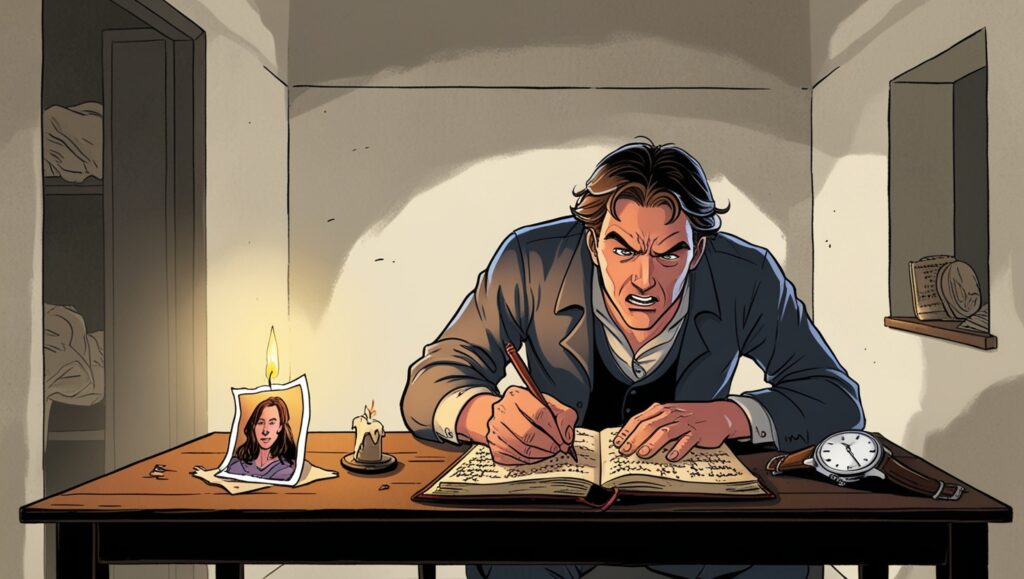
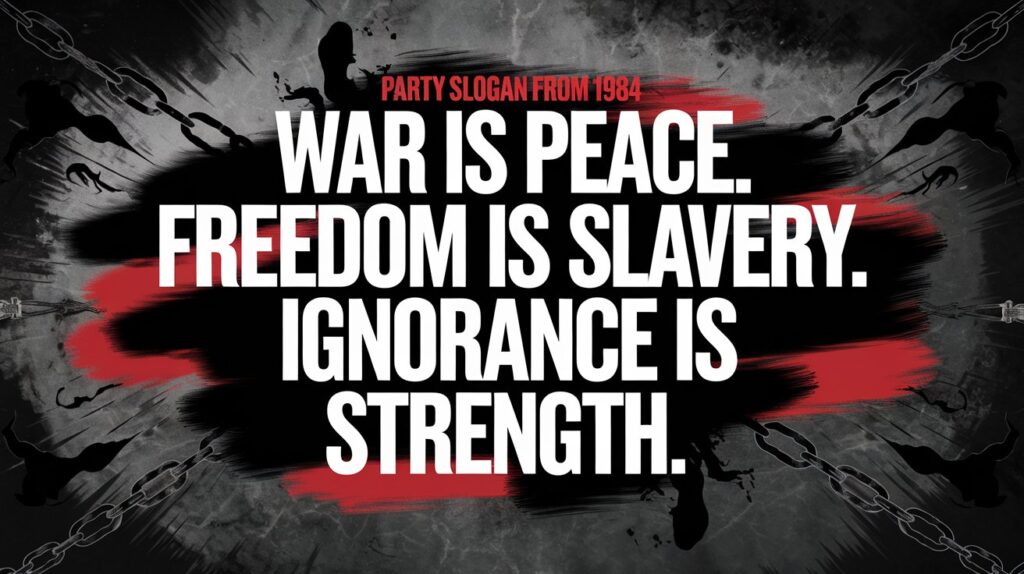
Winston’s greatest fear isn’t death—it’s losing the ability to think freely. In this oppressive society, even independent thinking is punishable by death—or worse. The Party’s infamous slogan says it all: ‘War is Peace. Freedom is Slavery. Ignorance is Strength.’
Winston’s journey isn’t just about resisting the Party; it’s about the battle for truth in a world where the truth is constantly being rewritten.
Orwell masterfully shows us how totalitarian regimes use technology, language, and fear to maintain power. One of the most terrifying elements of 1984 is the Party’s ability to manipulate reality itself. Through the Ministry of Truth, Winston helps change historical records, ensuring that the Party is always seen as infallible. Facts are twisted, and history is rewritten, leading to what Orwell calls ‘doublethink’—the act of holding two contradictory beliefs at the same time.
Then, there’s the concept of Newspeak, the Party’s official language. Newspeak aims to reduce the complexity of thought by eliminating words that could express rebellion. Without the language for freedom, how can you even think about it?
This is Orwell’s way of showing us that language shapes thought. Control the words people can use, and you control their minds.
As Winston’s quiet rebellion grows, he enters into a dangerous love affair with Julia, a fellow Party member who also secretly despises the regime. Their relationship is more than just romance—it’s an act of political defiance. In a world where the Party controls even personal relationships, love is a radical, rebellious act.
But Winston’s hope for freedom is short-lived. Their secret meetings are eventually discovered, leading to their arrest by the Thought Police—a chilling force that punishes those who dare to think differently.
Winston’s arrest introduces us to O’Brien, a high-ranking Party official who Winston once believed was part of the resistance. O’Brien’s betrayal is one of the most devastating moments in the novel, revealing that there is no real resistance, no underground movement. The Party is omnipotent and omniscient. Winston is taken to the Ministry of Love—Orwell’s ironic name for a place of torture and brainwashing.
This is where Orwell introduces the concept of Room 101, where the Party breaks down its prisoners with their worst fears. For Winston, that fear is rats, and the terror he experiences forces him to betray Julia, the woman he loves.
In the final chapters of 1984, we witness Winston’s complete mental and emotional breakdown. After brutal sessions of torture, Winston is re-educated, and his rebellious spirit is utterly crushed. His final transformation is heartbreaking—he goes from hating the Party to loving Big Brother. Orwell’s message is clear: in this world, rebellion is futile.
This haunting conclusion leaves us with a chilling question: in a society where the truth can be manipulated, where language is used to suppress thought, and where fear crushes the human spirit, is freedom even possible?
Now, let’s take a step back and talk about the themes of 1984. Orwell’s novel isn’t just about a distant, dystopian future—it’s a warning for us today. The dangers of surveillance, government control, and the manipulation of truth are more relevant than ever. With the rise of mass data collection, social media, and fake news, Orwell’s ideas hit uncomfortably close to home.
The concept of ‘Doublethink’—where people are forced to accept two opposing ideas as truth—is eerily similar to the kind of political and media discourse we see today. And the Party’s relentless pursuit of power for power’s sake mirrors the motives of authoritarian regimes across history.
1984 isn’t just a novel—it’s a warning. Orwell wanted us to question the power structures around us and to be vigilant about the preservation of truth. It’s a call to action to protect our freedoms, especially in a world that increasingly feels like it could slip into the kind of nightmare Orwell imagined.
While 1984 is a powerful exploration of totalitarianism, some critics argue that certain theoretical aspects are notably missing.
First, there’s a lack of hope or effective resistance. The narrative focuses on Winston’s failure, leaving readers questioning the possibility of rebellion against oppressive regimes.
Next, the novel predominantly presents a male perspective. Critics suggest that including voices from women or marginalized groups could enrich our understanding of life under the Party’s control.
Additionally, while psychological manipulation is a key theme, a deeper exploration of characters’ internal struggles would add complexity and nuance to their experiences.
We also see a limited analysis of the economic and social structures that support the Party. A broader look at class struggles could provide vital context for its control.
Furthermore, the ethical implications of technology in both oppression and potential resistance are not fully examined, which is particularly relevant in our digital age.
Orwell critiques various philosophies, but deeper engagement with the philosophical foundations of the Party’s ideology could enhance our understanding of their manipulation of truth.
Finally, while the suppression of art is significant, discussing how culture can serve as a form of resistance would highlight its importance in combating oppression.
For a visual and audio experience, check out my video summary of 1984 on YouTube. It’s a perfect way to grasp the essence of Orwell’s powerful narrative in just a few minutes.